LeBron James Workout Routine and Diet: The 5-Hour Game-Day Protocol
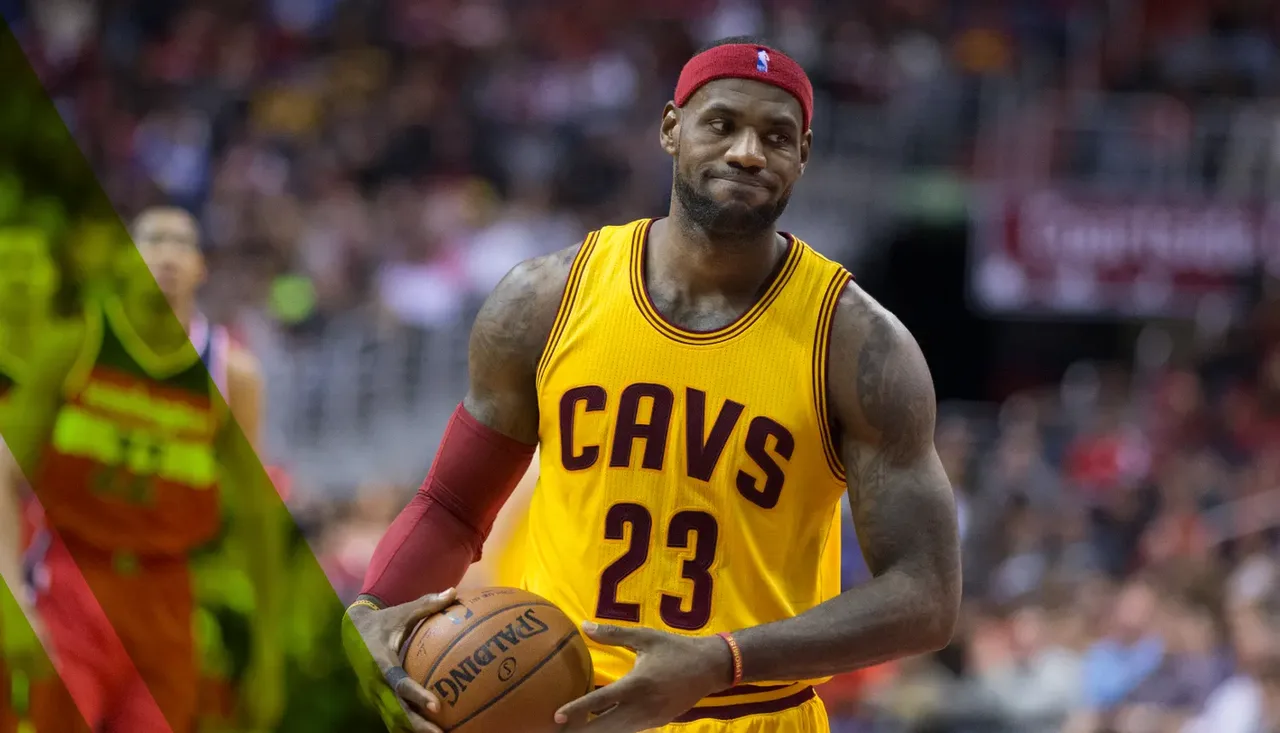
This breakdown is one of our basketball workouts.
Ask LeBron James what separates his recovery in his forties from every gadget in an NBA training room and he doesn't name a cryotherapy chamber or a supplement. He gives a single number: "99% is sleep. It's by far the greatest. I said it after the game — they asked me how, I said I just slept as much as I could." (Mind the Game, 06:52) Ask him how he knows when it will finally be time to retire, and he points to his pregame clock: "When it gets to the point where I don't feel like showing up to the arena five hours in advance, or I don't feel like training, or I don't feel like studying the scout sheet of guys — if it gets to that point, I know like, you know what, Bron, it's a wrap." (The Pat McAfee Show, 46:15)
That is the LeBron James workout routine in two habits: arrive five hours before tip-off to lift and prep the body, then guard sleep like a contract. Below you'll find his weekly offseason and in-season schedule, three workouts you can run this week (including the exact exercises demonstrated by his longtime trainer Mike Mancias), his practice-day fasting rule and game-day meal log, his recovery setup, and nine bizarre facts from his own interviews. Everything comes straight from 11 primary video interviews, podcasts, and gym demonstrations with James and Mancias.
LeBron James at a Glance
| Sport / position / team | Basketball, NBA forward (#23), Philadelphia 76ers (24th NBA season in 2026–27) |
| Born / age | December 30, 1984, Akron, Ohio; 41 as of October 2026 |
| Height / weight | 6 ft 9 in (206 cm), 250 lb (113 kg) |
| Performance coach / trainer | Mike Mancias (athletic trainer and performance director since 2003–04) |
| Training base | Philadelphia (in-season 2026–27) and Los Angeles / Akron (offseason) |
| Sessions per week | Offseason: 5 days/week (3 weight-room lifts + 2 band/core/court days); In-season: 45-min maintenance lifts on practice and non-back-to-back game days |
| Signature training methods | VersaClimber intervals, multi-planar clock lunges, landmine rotational presses, eccentric "braking" drills, Pilates reformer |
| Diet in one line | Fasted morning practices (first meal at 1:30–2:00 p.m.), clean whole foods, zero artificial sugars or fried foods in-season, no creatine or caffeine |
| Sleep | 8–10 hours at night (9:00 p.m. bedtime at home) plus a daily 1.5–2.5 hour afternoon nap in a 68–70°F blackout room |
| Best known for | NBA all-time leading scorer, 4× NBA champion, 4× NBA MVP, 3× Olympic gold medalist (2024 Paris Olympic MVP), first player to reach 24 NBA seasons |
Jump to the weekly schedule, the workouts or the diet.
Who Is LeBron James? The Road to Year 24 in Philadelphia
From Akron Football Fields to Eating Fast Food in the Locker Room
Before he was a 250-pound NBA ironman, LeBron James was a two-sport kid in Akron, Ohio, playing Pee Wee football at age nine under coach Frank Walker and earning All-Ohio honors as a high school wide receiver (MEDspiration, 25:27). When he entered the NBA straight out of St. Vincent–St. Mary High School at 18 in 2003, he relied almost entirely on genetic gifts. One childhood habit did stick: at 13, a friend gave him a three-part rule before every game — "play hard, have fun, and stretch" — that kept him stretching through his rookie years (Tim Ferriss Show, 17:09).
Almost everything else had to be learned from scratch. Mike Mancias, who met an 18-year-old James while working as a seasonal athletic training intern with the Cleveland Cavaliers in 2003, remembers what pregame nutrition looked like back then: "He used to eat fast food in the locker room before a game and still go out and drop 20, 30 points as an 18, 19-year-old kid." (High Performance, 20:31) Even more surprising, James spent his first dozen NBA summers playing pickup basketball outdoors on unforgiving concrete: "I used to play outdoor basketball as a pro. I had no idea how bad that was for me. But I was like, I fucking love ball." (Mind the Game, 26:31)
The Turning Point With Mike Mancias
The shift from raw talent to a round-the-clock system happened in stages during his first stint in Cleveland. By age 19, James had already made Mancias promise never to let him leave an arena without icing his knees (MEDspiration, 17:24). By his fourth season, he hired Mancias full-time so his body work wouldn't stop when team practice ended (High Performance, 11:36). On Halloween night in October 2007 — the evening before the Cavaliers' home opener — James called Mancias to his Akron house to stretch and activate the night before games. When Mancias knocked, James opened the door in a giant Batman costume, excused himself from 20 party guests, put on workout gear, and stretched on the floor so he wouldn't start game day stiff (High Performance, 14:45). That night-before prep became a 20-year ritual, much like Cristiano Ronaldo's recovery routine turned daily habits into a career past 40.
Where He Stands Now (October 2026)
In July 2026, after eight seasons with the Los Angeles Lakers, James signed a two-year, $8 million veteran-minimum deal with the Philadelphia 76ers to play a record-setting 24th NBA season alongside Joel Embiid, Tyrese Maxey, and Jaylen Brown. On October 20, 2026, at age 41, he made his 76ers debut on Opening Night at Madison Square Garden, posting 14 points, 9 rebounds, and 6 assists in a 106–100 win over the defending champion New York Knicks. Asked on court how his body felt after a late preseason ramp-up, he said: "I personally feel a lot better. Still getting my rhythm. Obviously, just a little bit over two weeks with the new squad, but I like the way we played. I think we played exceptionally well, especially defensively." (NBA on ESPN, 00:03) Two nights later, on October 22, 2026, he logged 33 minutes with 17 points, 10 rebounds, 5 assists, 3 steals, and a block as Philadelphia erased a 29-point deficit against his former team, the Cleveland Cavaliers, for a 114–106 home-opener victory — the largest comeback win of his 24-year career. His goal for Year 24 hasn't changed: "It's just about winning. Just trying to make plays to win. Very familiar with every scenario that this game has offered." (NBA on ESPN, 00:24)
LeBron James's Training Philosophy (In His Own Words)
"That first step out of bed will let you know how old your ass is"
James doesn't pretend training at 41 feels like training at 25. On his Mind the Game podcast with Steve Nash, he laughed about the morning reality check during NBA road trips: "It's that first step out of bed will let you know how old your ass is. And those are the moments I'll be like, 'Bron, what the hell?' And it's usually on the road, too." (Mind the Game, 02:42) Because recovery takes longer in his forties, his entire program is built around joint preservation, soft-tissue prep, and never letting stiffness accumulate from one flight to the next.
"If you completely just shut down and do nothing, then you won't do nothing"
When an NBA season ends, James takes four to six weeks away from grinding on the basketball court so his joints can calm down (Mind the Game, 09:28). What he refuses to do is stop moving altogether. "If you completely just shut down and do nothing, then you won't do nothing... you start to get comfortable with it." (Mind the Game, 10:12) As he and Nash put it, the body is an adaptive system: "If you sit on the couch and do nothing, you're someone that's adapted now to doing nothing." (Mind the Game, 10:57) Instead of couch rest, his deload weeks are filled with Pilates, yoga, cupping, pool workouts, and unloaded running on an AlterG anti-gravity treadmill (Mind the Game, 09:50).
"First, you look from the floor up: how much mobility do you have in your big toe?"
Before Mancias prescribes a single lift, he screens James from the ground up. "First, you look from the floor up: how much mobility do you have in your big toe? And then you go up the chain — the ankle, the knee, the hip, the low back, and the shoulders." (Tim Ferriss Show, 15:13, Mike Mancias) If the big toe or ankle is locked up after a flight, the knee and lower back take the torque on every cut and landing. That is why Nash asked James whether daily activation and mobility work are non-negotiable before touching a weight or a basketball. James's answer was two words: "Yeah, non-negotiable." (Mind the Game, 32:10)
"During the season, it's the same routine because it's a cadence"
A common mistake among basketball players is lifting heavy in the summer and abandoning the weight room from October to April, or chasing new one-rep maxes mid-week between games. James splits his year in two. In the summer he breaks training into distinct strength, power, and movement blocks so he doesn't get stale (Mind the Game, 02:57). Once the 82-game schedule starts, he shifts to 45-minute total-body maintenance sessions, including on game days: "During the season, it's kind of the same — a little bit it changes, but it's the same routine because it's a cadence. My body is formed and it knows exactly how it's going to get the most out of it for those games." (Mind the Game, 32:51) Mancias explains the shift over two decades: "It's not what we used to do when he was 22, 23 years old. Now we focus on mobility, core work, strength and endurance, and just keeping his weight under control." (MEDspiration, 22:25 & 29:14, Mike Mancias)
"I start knowing when I'm getting in better shape when I don't need as many breaks for water"
In August, when he ramps up his court conditioning for September training camp, James doesn't use a laboratory treadmill test to tell him when he is in game shape. He tracks water breaks across a 45-minute floor workout: "I start knowing when I'm getting in better shape when I don't need as many breaks for water. That's kind of like my gauge... If I'm doing a 45-minute court workout and every five to seven minutes through that 45 minutes I'm getting a drink of water, I'm like, 'Okay, I got to get better.' And then it gets to a point where I've only needed one break in 45 minutes. That's when I know like, okay, I'm in a really good pace." (Mind the Game, 25:23)
LeBron James's Weekly Training Schedule
James's week depends on the calendar. On Mind the Game, he broke down both his eight-to-ten-week summer ramp-up block before training camp and his in-season routine (Mind the Game, 20:02–21:33). During that summer lock-in, he trains five days a week from Monday to Friday, lifting weights three days (Monday, Wednesday, Friday) and dedicating Tuesday and Thursday to bands, core stability, Pilates, and on-court running and shooting.
| Day | Session 1 (Morning: Body Prep & Lift / Mobility) | Session 2 (Late Morning: Court & Conditioning) | Notes |
|---|---|---|---|
| Monday | Manual therapy, 8–10 min foam roll, full-body strength lift (45–60 min) | High-volume court conditioning, full-court movement drills, shooting | "Monday's the toughest day for me" coming off the weekend |
| Tuesday | Soft-tissue prep, resistance bands, Pilates / core stabilization | Catch-and-shoot volume, court running to get legs back underneath him | No heavy barbell lifting; focuses on rhythm and aerobic base |
| Wednesday | Manual therapy, mobility screen, strength & rotational power lift | Controlled 1-on-1 post/wing contact drills, game-speed shooting | "Hump day" — once Wednesday is cleared, the body catches up |
| Thursday | Foam roll, hip openers, 27-move mobility & core endurance flow* | Movement skill work, half-court reads, VersaClimber or turf sprints* | Second band/core day of the 5-day block |
| Friday | Manual therapy, total-body strength & eccentric braking session | 45-minute high-pace court workout (water-break conditioning test) | Wraps the 5-day Monday–Friday training block |
| Saturday | Complete rest ("where I do absolutely nothing") | Rest | Full physical and mental break away from the gym |
| Sunday | Soft-tissue body work, stretching, cold tub / hyperbaric recovery | Light mobility and mental prep for Monday | Resets the body before Monday's strenuous session |
* Reconstructed from Mind the Game (2025), Men's Health (2019), Tim Ferriss Show (2018), and MEDspiration (2024); James states the 5-day Monday–Friday structure, the 3 lift days vs. 2 band/core/ball days, and the Monday/Tuesday/Wednesday/Saturday/Sunday roles directly, while exact drill placement on Thursday is our read from Mancias's interviews.
Monday: Strenuous Lift and Pace Setter. After taking Saturday completely off, James makes Monday the hardest session of the week: "Monday's the toughest day for me. Why? Because I'm coming off the weekend... so my Mondays are very strenuous." (Mind the Game, 20:02) He starts with manual therapy on Mancias's table before hitting the weight room and the court.
Tuesday and Thursday: Bands, Core, and Rhythm. On the two non-lifting days, the focus shifts to core endurance, resistance bands, Pilates reformer work, and "a lot of running, but a lot of just catching, shooting, getting your legs back under you" (Mind the Game, 20:50).
Wednesday and Friday: Getting Over the Hump. "Hump day is Wednesday. And once you get over that Wednesday, the rest of the week is pretty right, because that middle of the week the body is now caught up a little bit." (Mind the Game, 20:50) By Friday, he finishes his third lift of the week and tests his court engine before shutting things down completely on Saturday.
In-Season Adjustments. Once the regular season begins, his lifting schedule is no longer tied to days of the week; it is dictated by the game and travel calendar. "If we had a couple days in between, I'll go to the weight room then, and I like to lift on game days as well," he explained, noting that the only time he skips a game-day lift is on the second night of a back-to-back, when he swaps weights for recovery work and light shooting (Mind the Game, 01:30 & 02:14). Athletes who manage dense competition calendars use the same rhythm — see Novak Djokovic's training routine for how another forty-something legend balances tour travel with daily mobility.
A Day in the Life of LeBron James (Practice Day vs. Game Day)
On Mind the Game, James walked Steve Nash hour-by-hour through both an in-season practice day and his famous five-hour game-day countdown (Mind the Game, 30:13–41:15):
In-Season Practice Day Timeline (11:00 a.m. Practice)
- 8:00–8:30 a.m.: Arrives at the team facility two and a half to three hours before practice. He trains fasted — no breakfast at home or at the facility, only water, green juice, or a piece of fruit (Mind the Game, 30:13).
- 8:45–9:30 a.m.: Manual therapy and non-negotiable mobility prep, followed by 45 minutes in the weight room (Mind the Game, 31:20).
- 11:00 a.m.–12:30 p.m.: Team practice on court.
- 12:30–1:15 p.m.: Drinks a fruit smoothie or eats overnight oats with his daily vitamins, then rotates through a massage, cold tub plunge, NormaTec compression boots, and ice bags before leaving the facility (Mind the Game, 30:57 & 33:58).
- 1:30–2:00 p.m.: Arrives home and eats his first full meal of the day (Mind the Game, 30:35).
- 2:30–5:00 p.m.: Mandatory afternoon nap (up to 2.5 hours), followed by a home foot bath or knee icing after waking up (Tim Ferriss Show, 28:16; Mind the Game, 04:25).
- 9:00 p.m.: Starts winding down for bed at home (Mind the Game, 07:59).
In-Season Game Day Timeline (7:30 p.m. Tip-Off)
- 1:00 p.m.: Leaves home (in Los Angeles or Philadelphia) after morning treatment and a pregame meal.
- 2:15 p.m. (5+ hours before tip-off): Pulls into the arena tunnel (Mind the Game, 38:11).
- 2:30–3:15 p.m.: Weight-room maintenance lift (skipped only on the second night of a back-to-back).
- 3:15–4:15 p.m.: Early on-court shooting workout, three to four hours before tip-off.
- 4:15–5:30 p.m.: Straight to the training table for manual therapy and body work with Mancias, then into NormaTec compression boots and ice bags (Mind the Game, 39:21).
- 5:30–6:45 p.m.: Eats a pregame snack or small meal in the locker room while studying the opponent scouting sheet, followed by the head coach's team meeting (Mind the Game, 39:44).
- 7:30–10:00 p.m.: Game time — and the moment the game ends, he is back in the locker room with his feet in ice bags and a recovery smoothie in hand to start the clock for the next game (Mind the Game, 43:31).
 A vertical climber sprint — Mike Mancias calls the VersaClimber a staple in LeBron James's routine, both as a warm-up and as a workout finisher.
Inside LeBron James's Workouts
Unlike many pro athletes who hide their gym numbers, Mike Mancias walked cameras through an exact LeBron James total-body session for Men's Health at Vitruvian Gym in Los Angeles, complete with sets, reps, foot angles, and rest periods (Men's Health, 00:06–05:01). Combined with the conditioning and eccentric deceleration drills James and Mancias described on The Tim Ferriss Show and MEDspiration, here are three sessions you can run.
Workout 1: LeBron James's Full-Body Strength & Rotational Session
This workout is as shown in Men's Health, 00:28–04:38 by Mike Mancias. Every exercise links hip stability, glute engagement, and core control rather than isolating single muscles on a machine.
| Exercise | Sets × Reps / Time | Rest | Why it matters |
|---|---|---|---|
| Full-body foam rolling (quads, calves, hamstrings, low back) | 8–10 min | — | Soft-tissue prep to release travel and game stiffness before loading |
| Spider-Man hip opener lunge | 1 × 10–12 reps | 30 s | Opens the hips and activates thoracic and core control |
| VersaClimber intervals | 3 × 30 s | 15–20 s | Zero-impact total-body cardio warm-up that drives heart rate sky-high |
| Barbell or ring inverted row | 3 × 8–12 reps | 60 s | Pulls shoulders back while forcing the glutes and core to lock in a plank |
| Single-arm landmine rotational press | 3 × 8–12 reps per side | 60 s | Transfers force from the back hip through the core into an overhead press |
| Multi-planar clock lunge ("Multi-Lunge") | 3 × 8–12 reps per leg | 60 s | Steps to 12, 2, and 3 o'clock (right) and 12, 10, and 9 o'clock (left) for 3D hip stability |
| Wide-base cable pulley chop | 3 × 8–12 reps per side | 45 s | Anti-rotation and rotational core power while sitting back into the glute |
Coach cues from Mancias:
- On the Landmine Rotational Press: "Part of LeBron's game is playing above the rim and transferring energy from the ground up into the rim." Load the bar in the left hand, sink into the hips, and rotate up as you press overhead (Men's Health, 02:42–03:30).
- On the Multi-Lunge: Picture standing on the center of a clock face. With your right foot, lunge forward to 12 o'clock, angled out to 2 o'clock, and laterally to 3 o'clock; with your left foot, hit 12, 10, and 9 o'clock, keeping your chest tall and eyes forward (Men's Health, 03:30–03:54).
- On the Cable Chop: Set your feet wider than shoulder-width and sit your weight back into your glutes so your front knee never drifts past your toes (Men's Health, 04:17–04:38).
Scaling: Beginners can swap the VersaClimber for a 30-second battle-rope or assault-bike interval, perform inverted rows with a higher bar angle, and do clock lunges with bodyweight only. For more ways to build rotational and lower-body force, explore our strength and power hub.
Workout 2: LeBron James's Offseason VersaClimber & Turf Sprint Conditioning
In the summer, James pairs indoor VersaClimber work with outdoor sprints on a turf football field. As Mancias told Men's Health, "The VersaClimber is literally a staple in LeBron's routine, whether it be for warm-up or conditioning at the end of a workout." (Men's Health, 01:13) And when Tim Ferriss asked James what he injects into his offseason conditioning besides the climber, James pointed straight to the gridiron: "Besides the VersaClimber, I actually really like running on the football field, for two reasons: you're outside, which is always a cool way to exercise, and then it kind of takes me back to my high school days of playing the game of football... It's more like 100-yard sprints from end zone to end zone." (Tim Ferriss Show, 44:12–44:58)
Because James says they run end-zone-to-end-zone sprints by heart-rate response rather than a fixed rep count, the table below is the Champ Workouts version, built from what James and Mancias describe.
| Exercise | Sets × Reps / Distance | Rest | Why it matters |
|---|---|---|---|
| Big-toe, ankle, and hip mobility prep | 8 min | — | Screens the lower chain from the floor up before sprinting |
| Dynamic turf warm-up (A-skips, high knees, defensive slides) | 5 min | — | Prepares tendons and calves for elastic ground contact |
| 100-yard football field strides (end zone to end zone) | 6–8 × 100 yd at 80–85% | Walk the end zone (60–75 s) | Builds repeatability across a 94-foot court without max-sprint hamstring strain |
| VersaClimber finisher sprints | 5 × 30 s hard effort | 30 s | Zero-landing-impact aerobic and anaerobic ceiling work |
| Walk and nasal-breathing cooldown | 5 min | — | Brings heart rate down before stretching |
If you want to see how a pure track specialist structures 100- to 400-meter repeats, compare this with Femke Bol's sprint and hurdle training, or browse our conditioning workouts.
Scaling: Beginners start with 4 × 100-yard striders at 75% effort and 90 seconds of walking rest. Intermediates run 6 × 100 yards and cap the VersaClimber at 3 × 30 seconds.
Workout 3: Mike Mancias's "Brake System" & Core Stabilization Circuit
When you weigh 250 pounds and have logged more NBA minutes than anyone in history, jumping isn't what wrecks your knees — landing and stopping is. As Mancias explained on MEDspiration: "Your brakes are the first thing that give out in an older car like he's driving, so we work a lot on our eccentric, on our stopping, on our brake system." (MEDspiration, 26:59, Mike Mancias) On road trips and non-lifting days when a Pilates reformer isn't handy, Mancias also puts James through a 27-move low-impact mobility and core stabilization sequence (MEDspiration, 30:47). This session is the Champ Workouts version, built from the exact drills Mancias names on camera.
| Exercise | Sets × Reps / Time | Rest | Why it matters |
|---|---|---|---|
| Barefoot big-toe extensions & ankle rocks | 2 × 12 each side | — | Restores foot and ankle dorsiflexion ("floor-up" screen) |
| Eccentric goblet split squat (4-second lowering phase) | 3 × 8 each leg | 60 s | Trains the quads and glutes to absorb force like shock absorbers |
| Single-leg mini-trampoline hop & stick (eyes open, then one eye closed) | 3 × 6 landings per leg | 45 s | Proprioception and ankle/knee stabilization on an unstable surface |
| Single-leg balance with partner tennis/lacrosse ball toss | 3 × 30 s per leg | 30 s | Forces the hip and core to stabilize while visual attention is on the ball |
| Stop-on-a-dime deceleration lunge (3 steps into a 2-second freeze) | 3 × 5 per leg | 45 s | Practices the exact eccentric braking mechanics of a closeout or drive |
| Dead-bug to hollow-body core hold | 3 × 45 s | 30 s | Builds deep trunk endurance without spinal compression |
This is an elite athlete's routine. Scale the volume and impact to your level, skip eyes-closed landing drills if you have ankle instability, and check with a physiotherapist or doctor if you have an injury.
Basketball-Specific Training: Brakes, Proprioception, and Controlled Contact
Eyes-Closed Trampoline Hops and Reaction Lights
How do you prepare an NBA player for landing on someone's foot in traffic when he's exhausted in the fourth quarter? Mancias takes away his vision in the gym. "We do a lot of unstable surface stuff with one eye closed, both eyes closed, hopping on a mini trampoline with one foot while I'm throwing lacrosse balls at him, catching them," Mancias explained (MEDspiration, 27:22). They also run blindfolded start-and-stop drills on the court and use BlazePod reaction lights so James has to decelerate, process a visual cue, and change direction in a split second (MEDspiration, 27:45).
Why He Stopped Playing August 5-on-5 Pickup Games
Earlier in his career, James spent August running full-court 5-on-5 pickup games against NBA pros. In his late thirties and forties, he cut those out almost completely. Why? In a chaotic 5-on-5 run, a stray foot under a jumper can end a season before training camp even opens (Mind the Game, 28:01). Instead, he simulates NBA physicality with controlled 1-on-1 days and pad-contact drills: while he comes off screens or works in the post, player-development coaches bump his hips and hit his chest with pads so his body gets calloused to contact without ten pairs of feet crowding the paint (Mind the Game, 28:35–29:28).
Pre-Practice Shooting Cadence
As James told Steve Nash, at least 19 of the top 20 players in the NBA are "religious about their routine — about what shots they need, all the prep, recovery, diet, sleep." (Mind the Game, 29:50) Every game-day afternoon, right after his 45-minute lift, he walks straight onto the arena floor three to four hours before tip-off to hit his exact spot-by-spot shooting progression while his muscles are already warm and mildly fatigued from the weight room (Mind the Game, 32:06).
See also: Simone Biles's training routine relies on the same blend of spatial awareness, proprioception, and soft-tissue prehab to protect joints under massive landing forces.
LeBron James's Diet: What He Eats in a Day
A Day of Eating (Practice Day vs. Game Day)
James eats differently on a practice day than he does on a game day. On practice mornings, he delays his first full meal until the afternoon: "I don't eat a full meal until I get back home after practice and that's usually around like 1:30, 2:00 — by design." (Mind the Game, 30:35) On game days, when he needs a massive calorie bank for 35 to 40 minutes on the floor at 7:30 p.m., Mancias says he starts with a heavy breakfast (High Performance, 40:57). On The Tim Ferriss Show, James walked through the exact meals he ate the day before (November 14, 2018, the night he scored 44 points to pass Wilt Chamberlain for fifth on the NBA all-time scoring list):
| Meal | Timing | What LeBron James Eats | Source |
|---|---|---|---|
| Practice-day morning | 8:00–11:00 a.m. | Fasted training: water, green juice, or fresh fruit only (no breakfast before practice) | Mind the Game, 30:13–30:36 |
| Post-practice refuel | ~12:30 p.m. (practice days) | Fruit smoothie or overnight oats + daily vitamin protocol; first full meal at home at 1:30–2:00 p.m. | Mind the Game, 30:35–31:07 |
| Game-day breakfast | Morning (game days) | Egg-white omelet with smoked salmon + gluten-free pancakes topped with berries | Tim Ferriss Show, 29:30 |
| Game-day pregame lunch | ~12:30 p.m. | Whole-wheat pasta, pan-seared salmon, and steamed vegetables | Tim Ferriss Show, 29:30 |
| Right before tip-off | ~6:45 p.m. | Classic peanut butter and jelly sandwich | Tim Ferriss Show, 29:30 |
| Halftime locker room | Halftime | Sliced apples with almond butter | Tim Ferriss Show, 29:30 |
| Immediate postgame | Within 30 min of buzzer | Plant-based protein shake with almond milk and fruit (no heavy whey or animal meat for the first hour) | Tim Ferriss Show, 29:54 & 33:48 |
| Postgame dinner | Late evening | Chicken parmigiana with a rocket (arugula) salad and one glass of Cabernet red wine | Tim Ferriss Show, 29:54 |
 A game-day pregame plate modeled on what James described to Tim Ferriss: pan-seared salmon, whole-wheat pasta, greens, berries, and tart cherry juice.
LeBron James's Food Rules
Zero artificial sugars or fried foods in-season. When Ferriss asked what he bans from October through June, James kept the list short: "Stuff that I never touch in-season is like artificial drinks, artificial sugars, fried foods." (Tim Ferriss Show, 32:19)
Cutting sugars even harder in the playoffs while loading carbs. Once the postseason starts, he tightens the screws on sugar while increasing complex carbohydrates: "The things that I start cutting down is the sugars when it comes to the playoffs — it kind of slows down the process of recovery... I kind of go heavy on the carbs because it gives you energy." (UNINTERRUPTED Trophies, 00:04–00:25)
Plant-based protein in the 30-minute postgame window. Mancias noticed years ago that heavy whey shakes right after a 40-minute game caused gut distress while James's body was still steaming from exertion (MEDspiration, 36:31–37:39). Now, for the first 30 to 60 minutes after the buzzer, James only takes a plant-based protein shake blended with almond milk and fruit before eating animal protein at dinner (Tim Ferriss Show, 33:48).
Cheat foods. His two weaknesses at home are dairy-free ice cream — he admits keeping three cartons in the family freezer — and warm, low-fat gluten-free chocolate chip cookies (Mind the Game, 41:37–42:44).
Supplements and Hydration
Two things surprise almost everyone who asks about his supplement stack: he does not take creatine, and he avoids caffeine. When Steve Nash asked if he uses creatine, James replied immediately: "Uh, no. No creatine. No, just natural everyday vitamins, things of that nature." (Mind the Game, 30:57) And Mancias adds that coffee and pre-workout stimulants are off the table too: "For guys like LJ, he doesn't tolerate caffeine well, so we stay away from caffeine and we just stick to all-natural stuff." (MEDspiration, 43:22, Mike Mancias)
For hydration, James carries a one-gallon jug of water everywhere and drinks roughly two gallons a day (High Performance, 41:42). After the infamous 2014 NBA Finals Game 1 in San Antonio — when broken arena air conditioning triggered severe full-body cramping — Mancias overhauled their hydration science. They started using forearm sweat-patch monitors to measure exactly how much sodium and potassium James loses per hour, and now load electrolytes and glucose in the third quarter before potential overtime games (MEDspiration, 20:09 & 52:34). To dial in your own daily fuel numbers, work out your own calorie target and browse our diet and nutrition hub.
An NBA forward burning thousands of calories a night needs far more fuel and fluid than a typical gym-goer. Scale meal sizes and hydration to your body weight and activity, and consult a dietitian or physician before fasting or changing your diet.
See also: Katie Ledecky's swimming diet and hydration shows how an Olympic distance powerhouse times carbohydrates and fluids around two-a-day sessions.
Recovery and Sleep: How LeBron James Stays Fresh
Sleep: The 68°F Cave, the 9:00 p.m. Bedtime, and the 15-Hour Portland Nap
If you ask James or Mancias for the real secret to 24 NBA seasons, both point to the bedroom. At home, James starts asking his wife Savannah what time she's heading to bed around 9:00 p.m.: "My wife, literally she's the best ever. She gets mad at me when it's time for me to go to bed. That's how much I love sleep and take care of my body. Like, babe, about 9:00 at night, I'm like, 'What time you going to bed?' She like, 'You going to sleep?' Yeah, like, I am going to bed." (Mind the Game, 07:59)
On the road, Mancias sets up every hotel room to the same spec: thermostat locked between 68 and 70°F (20–21°C), complete blackout curtains, and all phones, iPads, and televisions turned off 30 to 45 minutes before lights out (Tim Ferriss Show, 25:56). James plays the "Rain on Leaves" soundscape on the Calm app every night (Tim Ferriss Show, 27:08), and instead of taking synthetic melatonin after late flights, Mancias mixes him 6 to 8 ounces of tart cherry juice with magnesium to lower inflammation and trigger natural sleep (High Performance, 46:41, Mike Mancias).
How far will he take sleep on a back-to-back? On Mind the Game, James told the story of landing at a Portland hotel at 3:00 a.m. after a game the night before. He fell asleep at 4:30 a.m., woke at 10:30 a.m. for an hour of treatment with Mancias, went back into a deep sleep at 1:00 p.m., snoozed his 2:30 p.m. and 4:00 p.m. alarms, finally woke up at 4:15 p.m., caught the 5:00 p.m. final bus to the arena, skipped his normal pregame court warm-up, and dropped 40 points: "I always say like I'm like a 1965 Chevy Caprice. So I just needed a little bit of time on the highway. Go rev it up. Get a little smoke out of the engine." (Mind the Game, 05:22–06:31)
Recovery Tools (and Why He Walks Off the Court Early)
Fans sometimes notice James walking toward the tunnel with six seconds left in a blowout. On Mind the Game, he explained why: "I got to get to the locker room to start my process to get ready for the next game. So I'll be sitting in the locker room, foot in an ice bag, ice bags on, I got my smoothie and my fruit and I'm already getting to it right now." (Mind the Game, 43:31) His daily recovery rotation includes:
- Hyperbaric oxygen chamber and contrast tubs (hot and cold plunges).
- NormaTec dynamic leg compression boots and hotel-bathtub ice baths (Men's Health, 05:23).
- Soft-tissue massage, cupping, and grounding: "I fell in love with the hyperbaric chamber, the hot and cold tub, the plunges, the massages, the everything, the grounding, just going out and sitting in the grass and just literally just letting go." (Mind the Game, 13:56)
You can pair these methods with the protocols in our mobility and recovery hub.
The LeBron James Mindset
"How can you sleep better at night when you know that you've cheated the process?"
After 23 seasons, four rings, and the all-time scoring record, why keep showing up five hours before tip-off? For James, it comes down to internal accounting: "How can you sleep better at night when you know that you've cheated the process or you didn't give everything that you had when you had all the opportunities to?" (Mind the Game, 47:46)
At the 2024 Paris Olympics training camp in Las Vegas, at age 39, Mancias watched James set the tone for a roster of Hall of Famers by being the first man in the hotel weight room at 7:30 a.m. every morning, first on the treatment table, and first in the layup line — on his way to winning Olympic MVP (High Performance, 30:23). That same two-a-day discipline runs through Léon Marchand's Olympic swimming routine from those same Paris Games.
Reading, Film on the Treatment Table, and "The Man in the Arena"
James treats mental prep as part of body work. While Mancias stretches his hamstrings or flushes his legs, James is already watching iPad film of an opponent they play two or three days later (High Performance, 25:00). He keeps Theodore Roosevelt's "The Man in the Arena" passage in his locker and writes it on his game shoes (Tim Ferriss Show, 22:50). And when the playoffs arrive, he shuts off social media completely and reads books cover-to-cover — Mancias notes he has read Paulo Coelho's The Alchemist multiple times during postseason runs to keep his mind quiet (High Performance, 1:05:37).
9 Bizarre Facts About LeBron James You Didn't Know
1. He Answered the Door in a Giant Batman Costume for a Pre-Game Stretching Session
On Halloween night in October 2007, the evening before the Cleveland Cavaliers' home opener, James asked Mancias to drive down to his Akron home so they could stretch and activate the night before the game. When Mancias rang the bell, the 6-foot-9 forward opened the door wearing a full-body Batman suit in the middle of a family Halloween party, then stepped away from 20 guests to change into training shorts and do his floor stretches (High Performance, 14:45).
2. At Age 19, He Ordered His Trainer Never to Let Him Leave an Arena Without Icing His Knees
Most teenagers have to be chased by trainers to put ice on their joints. In his second NBA season, a 19-year-old James pulled Mancias aside and gave him a standing order: never let him walk out of an arena after a game without bags of ice strapped to his knees (MEDspiration, 17:24).
3. His Famous 2014 "Paleo Summer" Backfired With Knee and Back Pain
In the summer of 2014, before returning to Cleveland, James went on a strict 67-day no-carb, no-sugar, Paleo-style diet and dropped noticeable weight. What almost nobody knows is that once training camp started, his joints rebelled. As Mancias revealed on MEDspiration, playing at that lighter weight under NBA loads triggered unexpected knee and lower-back pain, forcing them to bring complex carbs and a few pounds of protective mass right back (MEDspiration, 22:46).
4. He Hops on a Mini Trampoline With One Eye Closed While Catching Lacrosse Balls
To keep his ankles and knees from giving out when landing in traffic, Mancias has James hop on one foot on a mini rebounder trampoline with one eye shut — or completely blindfolded — while firing lacrosse balls at him to catch mid-air (MEDspiration, 27:22).
5. He Played Outdoor Pickup on Concrete for His First 12+ NBA Seasons
Even while winning MVPs and NBA titles, James spent his summers playing pickup basketball outdoors on blacktop in Akron — and even built a full-court outdoor concrete court in his own backyard: "I used to play outdoor basketball as a pro. I had no idea how bad that was for me." (Mind the Game, 26:31)
6. Pat Riley Secretly Banned Flight Attendants From Baking His Chocolate Chip Cookies on the Miami Heat Plane
During his years in Miami, flight attendants on the team charter used to bake fresh chocolate chip cookies for James on road flights — until team president Pat Riley quietly ordered them to stop. On The Pat McAfee Show, James laughed that the whole roster noticed the moment the smell of warm cookies disappeared from the cabin (The Pat McAfee Show, 12:45).
7. He Doesn't Take Creatine or Drink Coffee — and Uses Tart Cherry Juice Instead of Melatonin
Despite playing one of the most explosive power games in basketball history, James takes zero creatine (Mind the Game, 30:57), avoids caffeine because his stomach and nervous system don't tolerate it (MEDspiration, 43:22), and skips melatonin pills in favor of tart cherry juice mixed with magnesium before bed (High Performance, 46:41).
8. Mike Mancias Has to Physically Hand Him a Bottle in Timeouts Because He Forgets to Drink
Because James spends NBA timeouts drawing up adjustments with coaches and teammates, he routinely forgets to drink for two or three timeouts in a row. Mancias had to start standing directly beside his chair during every timeout to physically place an electrolyte bottle in his hand (MEDspiration, 51:27–52:12).
9. Myth Check: Does LeBron James Really Spend $1.5 Million a Year on His Body?
For nearly a decade, one of the most repeated stats on r/nba and sports television is that LeBron James spends exactly $1.5 million a year on his body. In March 2025, Pat McAfee finally asked him about the number face-to-face. James burst out laughing and killed the rumor on the spot: "I don't know where the hell that shit came from... Listen, I do take care of my body, but I have no idea where the amount of money came from. I do invest in my body for sure — a lot of soft tissue work, massages, hyperbaric chambers, ice tubs." (The Pat McAfee Show, 01:55–02:18)
What You Can Steal From LeBron James's Training
- Screen your mobility from the big toe up. Before you squat or run, spend five minutes checking big-toe extension, ankle dorsiflexion, and hip openers. Suits anyone with stiff knees or lower-back tightness.
- Train your "brakes," not just your jump. Add four-second eccentric split squats and single-leg stick landings twice a week so your tendons can absorb force. Suits basketball, football, and tennis players over 30.
- Use zero-impact cardio finishers. Swap extra pavement miles for 3 × 30-second vertical climber, assault bike, or pool intervals to spare your joints. Suits heavier lifters and court athletes, just like Ilia Topuria's conditioning work.
- Never go from 100 to zero in the offseason. When you take a break from heavy lifting or sport, replace it with yoga, Pilates, walking, or swimming so your body doesn't adapt to the couch. Suits everyone.
- Keep in-season lifting to 45-minute total-body maintenance. When competition volume is high, touch strength, core, and mobility in one short full-body session instead of chasing sore legs with body-part splits. Suits rec-league and amateur athletes.
- Use the water-break test to gauge your conditioning. Track how many times you reach for your bottle during a 45-minute session; when you only need one break, your pace is game-ready. Suits court and field athletes.
- Go light on the gut right after late-night games. Use a light plant-based shake and fruit right after intense night sessions, then eat your solid dinner once your heart rate and core temperature settle. Suits late-evening trainees.
- Guard the 68°F blackout sleep window. Shut screens off 45 minutes before bed, cool the room to 68–70°F, and try tart cherry juice with magnesium instead of late caffeine. Suits everyone.
A Starter Week Inspired by LeBron James
Champ Workouts version for a normal reader, 4 days a week:
| Day | Session | Time |
|---|---|---|
| Monday | Workout 1 (Full-Body Strength & Rotational Session: foam roll, inverted rows, landmine press, clock lunges, cable chops) | 50 min |
| Tuesday | Workout 3 ("Brake System" eccentric split squats, single-leg balance, 20 min mobility/core flow) | 35 min |
| Thursday | Workout 1 (repeat full-body maintenance lift) + 30 min shooting or skill work | 60 min |
| Friday | Workout 2 (6 × 100-yard turf strides at 80% + 4 × 30 s climber or bike intervals) | 35 min |
Looking for Something More Specific?
- Basketball workouts hub: our home for court conditioning, vertical power, and NBA longevity breakdowns.
- Strength and power: rotational lifts, lower-body force, and eccentric deceleration work.
- Mobility and recovery: sleep protocols, soft-tissue prep, and joint longevity.
- Cristiano Ronaldo's training routine: the football equivalent of playing past 40 on sleep and daily recovery.
- Novak Djokovic's training routine: how tennis's all-time leader uses mobility, elastic strength, and strict nutrition to outlast younger stars.
- All athletes: browse every athlete training breakdown on the site.
- Start here: new to Champ Workouts? Begin here to pick a routine by sport or goal.
LeBron James Training FAQ
What is LeBron James's workout routine?
In the offseason ramp-up, he trains five days a week (Monday to Friday): three days of total-body strength, rotational power, and eccentric braking work in the weight room, plus two days of resistance bands, Pilates, core stability, and on-court conditioning. In-season, he does 45-minute full-body maintenance lifts before practice and five hours before tip-off on non-back-to-back game days. See the weekly schedule.
What does LeBron James eat in a day?
On practice days, he trains fasted in the morning (drinking only water, green juice, or fruit), has a fruit smoothie or overnight oats after practice, and eats his first full meal around 1:30 or 2:00 p.m. On game days, he eats an egg-white and smoked-salmon omelet with gluten-free berry pancakes for breakfast, whole-wheat pasta with salmon and vegetables for lunch, a PB&J before tip-off, apple slices with almond butter at halftime, a plant-based protein shake postgame, and chicken parmigiana with salad for dinner (Tim Ferriss Show).
Does LeBron James take creatine or drink coffee?
No to both. On Mind the Game, James stated directly that he does not take creatine, sticking to daily vitamins, plant-based protein shakes, and electrolyte mixes (Mind the Game, 30:57). His trainer Mike Mancias also confirmed on MEDspiration that James does not tolerate caffeine well and avoids coffee and stimulants (MEDspiration, 43:22).
How many hours does LeBron James sleep?
He aims for 8 to 10 hours of sleep per night — often heading to bed around 9:00 p.m. at home — plus a daily afternoon nap of 1.5 to 2.5 hours, and up to 15 hours of cumulative sleep across back-to-back road travel days. His bedroom is kept at 68–70°F in total darkness with the Calm app playing "Rain on Leaves" (Mind the Game, 06:52; Tim Ferriss Show, 25:56).
Who is LeBron James's trainer?
Mike Mancias has been James's athletic trainer since 2003–04 and serves as his full-time performance director. Having first met an 18-year-old James as a seasonal intern with the Cleveland Cavaliers, Mancias oversees his daily mobility screens, weight-room sessions, soft-tissue therapy, sweat-patch hydration testing, and road recovery setup (High Performance, 02:27).
Does LeBron James really spend $1.5 million a year on his body?
No — at least not that specific viral figure. On The Pat McAfee Show in March 2025, James said he has "no idea where the amount of money came from," though he confirmed he invests heavily in his body through full-time performance staff, private chefs, home gym equipment, hyperbaric chambers, and daily soft-tissue therapy (The Pat McAfee Show, 02:18).
Which team does LeBron James play for in 2026–27?
As of October 2026, James plays for the Philadelphia 76ers in his historic 24th NBA season. He signed a two-year deal with Philadelphia in July 2026 and debuted on October 20, 2026 with a 106–100 Opening Night win over the New York Knicks at Madison Square Garden (NBA on ESPN).
Sources
Primary videos (newest first; ★ = most quotes):
- 'It's just about winning' - LeBron James on his 76ers debut — NBA on ESPN, 2026-10-21, YouTube _3vNSJ19SGw
- Lebron James and Steve Nash Break Down Off-Season Recovery Routines — Prime Video (Mind the Game), 2025-04-21, YouTube ltK2WsNYJJU
- Lebron James Breaks Down His Game-Day Routine — Prime Video (Mind the Game), 2025-04-18, YouTube 8rMWjC23-Ww
- LeBron's Routine in Detail | LeBron James & Steve Nash ★ — Mind the Game, 2025-04-08, YouTube pV8s29X33pk
- The LeBron James Unfiltered Full Interview — The Pat McAfee Show, 2025-03-26, YouTube vH0OetsEZ7A
- LeBron James' Trainer: Our Secret To 20 Years Of NBA Dominance ★ — High Performance, 2024-09-16, YouTube fXP_2KaxFy4
- Mike Mancias - LeBron's Trainer Details SECRETS to RECOVERY & LONGEVITY ★ — MEDspiration, 2024-06-10, YouTube hNBjYc4dvQA
- LeBron James Workout Explained By His Trainer | Train Like A Celebrity ★ — Men's Health, 2019-09-26, YouTube KkmKUASy-p0
- LeBron James and His Top Secret Trainer, Mike Mancias ★ — The Tim Ferriss Show, 2018-12-20, YouTube YRz7IaKUYnE
- How LeBron's Diet Changes His Game | TROPHIES — UNINTERRUPTED, 2017-06-04, YouTube ChOdhpdO0Vk
- LeBron's Postseason Grind | TROPHIES — UNINTERRUPTED, 2017-04-20, YouTube YisGjNcgjLI
Forums (questions and myth context): r/nba: How LeBron spends $1.5 million a year on his body; r/nba: Maverick Carter on LeBron's annual body investment.
Background (current 2026–27 roster, dates, and box scores only): NBA.com: LeBron James player profile; AP News / ESPN coverage of his July 2026 Philadelphia 76ers signing and October 20–22, 2026 Opening Night and home-opener wins.
Quotes are taken from the video captions and lightly cleaned of filler words; timestamps link to the exact moment.
Looking for something more specific?
Keep reading
Léon Marchand Training: Inside the Regimen of a World-Class Swimmer
Léon Marchand Training Routine Léon Marchand is one of the most versatile and talented swimmers of his generation, known for his impressive achievements across…
Ilia Topuria Workout Routine and Diet: Two Sessions, One Cheat Meal
How Ilia Topuria trains, eats and recovers, told in his own words: two sessions a day, a 12-week diet with one cheat meal, track intervals he hates, and the…
Inside the Katie Ledecky Workout: The Training Secrets Behind a Swimming Legend
A Look at Katie Ledecky’s Background and Journey to Becoming a Swimming Legend When you talk about swimming legends, there’s one name that cuts through the…